Udyam Registration: Empowering Indian Entrepreneurs Through Digital Inclusion

India’s entrepreneurial spirit is one of its greatest strengths. From small manufacturing units to service-based startups, millions of micro, small, and medium enterprises (MSMEs) drive the country’s economic engine. Yet, for many years, the lack of formal recognition limited their growth potential. To overcome this challenge and promote transparency, the Government of India introduced Udyam Registration, a simplified online system designed to empower small business owners and integrate them into the formal economy.
This registration has transformed how businesses operate, making it easier for entrepreneurs to access financial aid, government schemes, and business development opportunities.
What is Udyam Registration?
Udyam Registration also known as Udyam Aadhar is a government initiative that provides a unique identification number and a digital certificate to MSMEs in India. Managed by the Ministry of Micro, Small, and Medium Enterprises, this system replaced the earlier Udyog Aadhaar process in 2020, making it more efficient, automated, and transparent.
Through this initiative, entrepreneurs can register their businesses online in a paperless and self-declaration-based manner. Once registered, enterprises receive official recognition as MSMEs, unlocking numerous benefits and protections that help them grow sustainably.
The system has become a cornerstone of India’s Digital India and Ease of Doing Business missions.
Importance of Udyam Registration for MSMEs
Small businesses often face challenges such as lack of financing, limited market access, and delayed payments. Udyam Registration addresses these issues by providing an official identity that helps enterprises build credibility and access formal support networks.
Here’s why this registration is vital for MSMEs:
-
Formal Recognition:
It brings informal businesses into the organized sector, allowing them to operate legally and confidently. -
Government Benefits:
Registered MSMEs can access multiple subsidies, grants, and incentive schemes that promote growth and innovation. -
Access to Finance:
Banks and financial institutions offer collateral-free loans and lower interest rates to registered MSMEs. -
Improved Market Reach:
With official recognition, enterprises can participate in government tenders and expand their operations. -
Data-Driven Policy Support:
The system enables the government to gather reliable data and design targeted support programs for MSME development.
In essence, Udyam Registration acts as a bridge connecting entrepreneurs with formal financial systems and development programs.
Eligibility Criteria for Udyam Registration
Any enterprise involved in manufacturing, production, or service-related activities can register under Udyam. The classification depends on investment in plant and machinery (for manufacturers) or equipment (for service providers), along with annual turnover.
Classification Guidelines:
-
Micro Enterprises:
Investment up to ₹1 crore and turnover up to ₹5 crore. -
Small Enterprises:
Investment up to ₹10 crore and turnover up to ₹50 crore. -
Medium Enterprises:
Investment up to ₹50 crore and turnover up to ₹250 crore.
This dual-parameter classification ensures fairness and flexibility, allowing businesses to scale without losing their MSME status prematurely.
Documents and Information Required
Udyam Certificate has simplified documentation, ensuring ease and speed for applicants. Entrepreneurs need to provide:
-
Aadhaar number of the owner or managing partner.
-
PAN of the business or proprietor.
-
Type of organization (proprietorship, partnership, LLP, company, etc.).
-
Official address and contact details.
-
Bank details for transactions.
-
Investment and turnover information (self-declared).
No physical documents are required; verification is automated through linked government databases such as PAN and GST.
Step-by-Step Process for Udyam Registration
The registration process is entirely online and designed to minimize human intervention.
-
Enter Aadhaar and PAN:
The applicant begins by providing the Aadhaar and PAN numbers. The system verifies these through integrated databases. -
Provide Business Information:
Details about the organization’s name, address, and activities are filled in. -
Investment and Turnover Declaration:
The applicant self-declares the investment and turnover figures. -
Verification and Submission:
The system automatically verifies the information using GST and Income Tax records. -
Issuance of Certificate:
Upon successful verification, the system generates an Udyam Registration Certificate along with a Unique Identification Number (UIN).
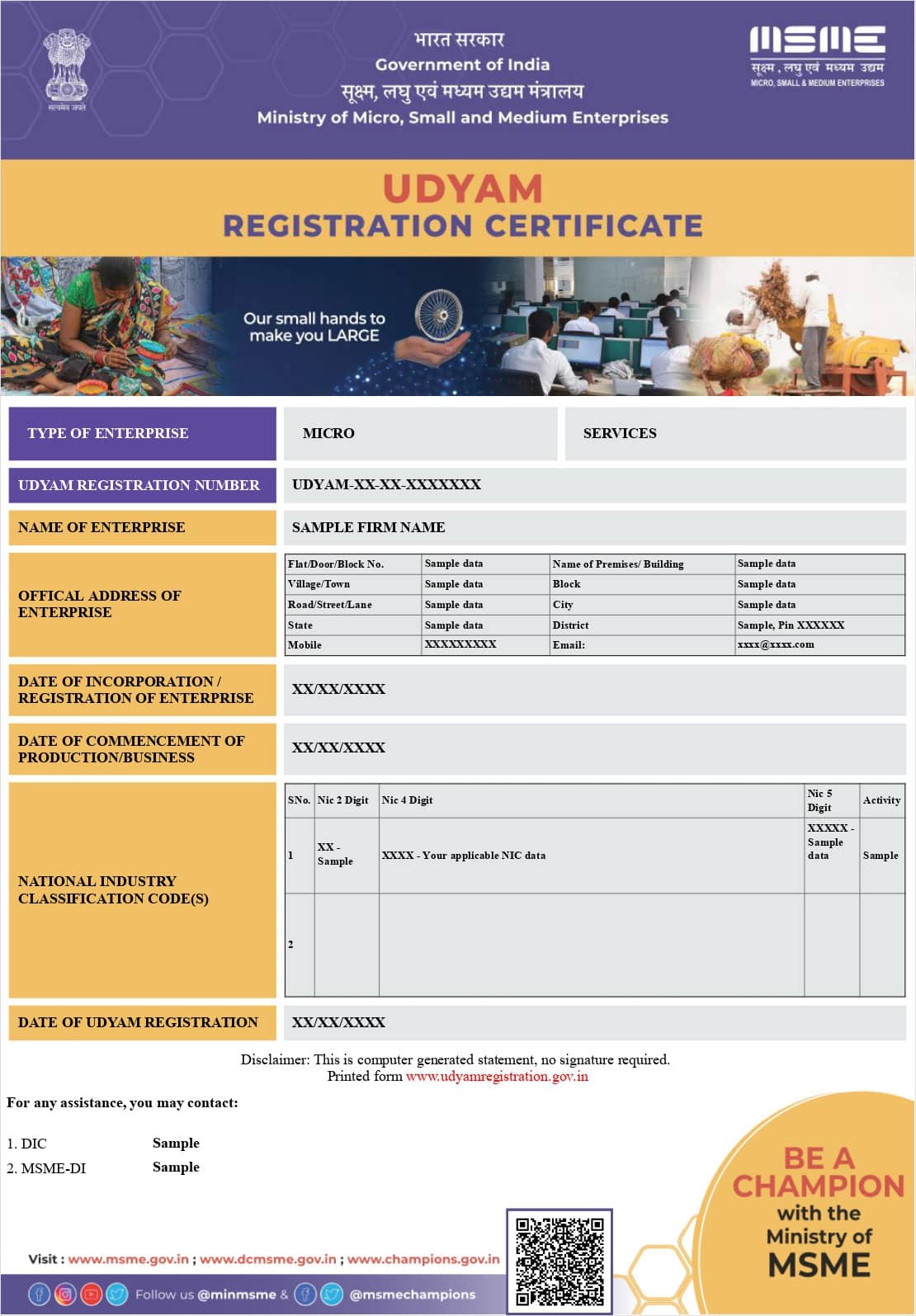
This quick and efficient process ensures transparency and reduces the burden of bureaucracy for entrepreneurs.
Benefits of Udyam Registration
Udyam Registration provides several direct and indirect advantages that help MSMEs grow and remain competitive.
1. Access to Financial Support
Registered enterprises can apply for collateral-free loans and enjoy lower interest rates under MSME credit schemes. This access to affordable finance boosts their working capital and expansion plans.
2. Priority in Government Procurement
The government reserves a portion of public procurement contracts for MSMEs, ensuring equal opportunity in tender participation.
3. Subsidies and Incentives
Registered MSMEs receive financial assistance for patent registration, quality certification, and technological upgradation programs.
4. Protection Against Payment Delays
Under the MSME Development Act, registered enterprises are legally protected against delayed payments from buyers. This ensures better cash flow and financial stability.
5. Tax and Compliance Relief
Several tax rebates, exemptions, and simplified filing procedures are available to registered MSMEs.
6. Increased Market Credibility
An officially registered business gains customer trust, supplier confidence, and stronger partnerships with other organizations.
7. Enhanced Export Opportunities
Registered MSMEs receive support under export promotion policies and international trade facilitation programs.
Udyam Registration and the Digital Economy
One of the most transformative aspects of Udyam Registration is its alignment with India’s digital ecosystem. It integrates seamlessly with other government databases such as:
-
Income Tax Department for PAN validation.
-
GSTN for turnover verification.
-
GeM (Government e-Marketplace) for tender participation.
This integration promotes transparency, reduces manual errors, and helps the government maintain accurate MSME data for future planning.
Moreover, the digital registration system encourages entrepreneurs to adopt online practices such as digital payments, e-invoicing, and cloud-based accounting—strengthening India’s digital economy from the grassroots level.
Udyam Registration and Inclusive Growth
India’s economic vision emphasizes inclusivity—ensuring every entrepreneur, regardless of scale or location, can contribute to national development. Udyam Registration supports this vision by empowering women entrepreneurs, rural businesses, and first-time founders.
Special training programs and awareness drives are being conducted across states to help small business owners understand the registration process and leverage available benefits.
This inclusion-driven approach ensures that every segment of society can participate in India’s growth journey.
Common Challenges Faced by Entrepreneurs
Despite its simplicity, some MSMEs face challenges during the registration process:
-
Limited internet access in rural regions.
-
Lack of awareness about benefits and eligibility.
-
Difficulty understanding turnover and investment criteria.
-
Occasional technical issues on the online portal.
To address these challenges, government bodies, NGOs, and industry organizations are collaborating to offer guidance, helpline services, and digital literacy training.
The Future of MSME Formalization in India
The future of small business development in India lies in digital empowerment and transparency. Udyam Registration is expected to play an even more prominent role as technology continues to evolve.
In the coming years, we may see features such as:
-
Mobile-based registration tools for rural accessibility.
-
AI-based data insights for policy optimization.
-
Integration with export databases to promote global trade.
-
Automatic business analytics dashboards for registered entrepreneurs.
These advancements will further simplify the business ecosystem and make Udyam Registration a truly transformative tool for India’s MSME sector.
Conclusion
Udyam Registration marks a major milestone in India’s journey toward economic formalization and self-reliance. By giving every small business a unique identity, it opens the door to financial growth, legal protection, and national recognition.
This initiative goes beyond paperwork—it builds confidence among entrepreneurs, encourages innovation, and strengthens the digital backbone of India’s economy.
For aspiring and existing business owners, registering under Udyam is not just a procedural step but a strategic move toward sustainable growth and long-term success.


Comments
Post a Comment